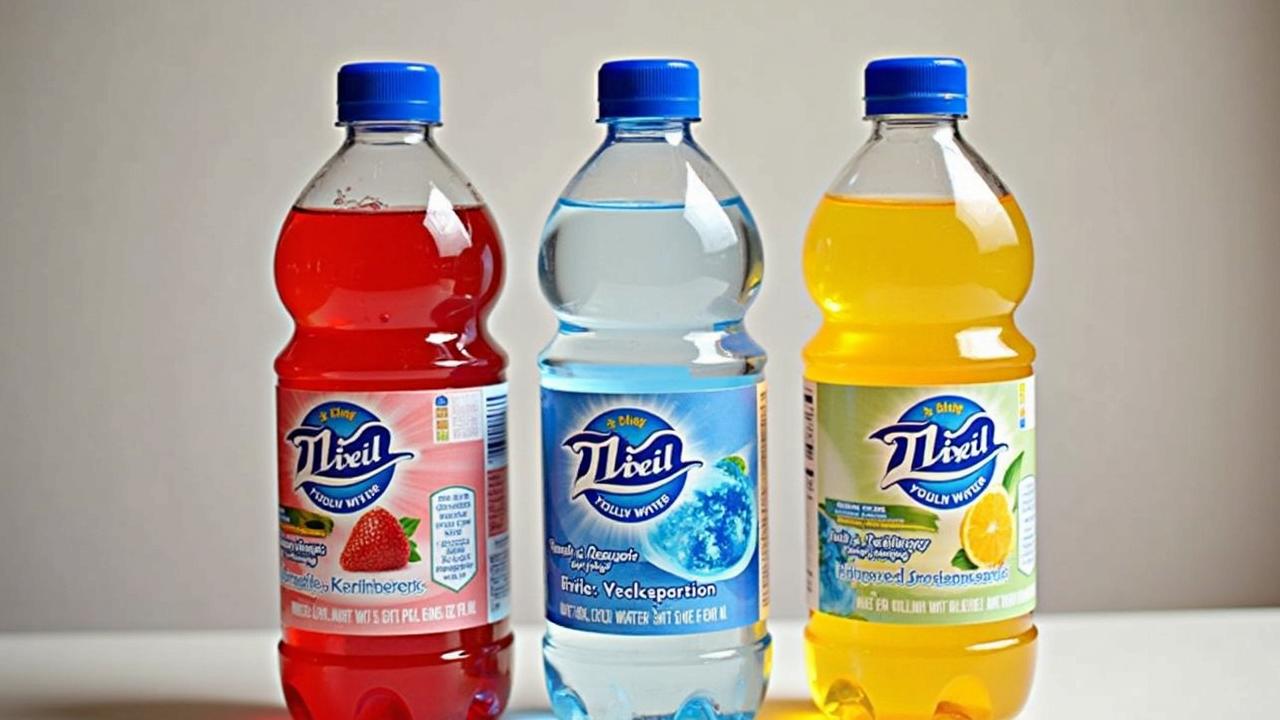
<strong>Refreshing, fruity and everywhere in supermarkets, bottled flavoured waters look harmless.
Behind the labels, the reality is far more nuanced.
From lemon to peach-apricot, these colourful drinks promise hydration with a twist. Yet French consumer magazine 60 Millions de consommateurs has raised fresh questions: how are these waters classified, what treatments do they undergo, and what do they really bring to our bodies and our local economies?
What bottled flavoured water actually is
The expression “flavoured water” sounds close to “mineral water”, and that creates a lot of confusion. In legal terms, they are not the same product at all.
Even when a brand uses spring water or natural mineral water as a base, the moment flavours, sweeteners or other ingredients are added, the drink is reclassified. It leaves the strict category of “natural mineral water” and joins a broader family of soft drinks.
Flavoured waters do not enjoy the same legal protection as natural mineral waters, even when they come from the very same spring.
That change of status matters. It affects what treatments are allowed, which additives can be used, and how the product is presented to consumers. The word “water” on the front of the bottle often hides a long list of extra components on the back.
Are flavoured waters treated like tap water?
Natural mineral water, under European rules, must be bottled at the source and cannot be disinfected in ways that alter its original purity. Flavoured waters are under a softer regime.
Once flavours and other ingredients are mixed in, manufacturers are allowed to use certain treatments comparable to those used for drinking water supply. These can include processes designed to remove microbes or adjust the microbiological quality of the final beverage.
This does not mean the product is unsafe. It means that the regulatory mindset shifts from “untouched natural resource” to “manufactured beverage” that can be processed to guarantee stability on shelves.
From a regulatory point of view, a lemon-flavoured bottled drink sits closer to a soft drink than to mountain spring water.
➡️ Intermarché: it’s official, the wolf from the advert is becoming the supermarket’s mascot
➡️ Stuck shell, torn whites: that’s ancient history with the spoon trick for peeling hard-boiled eggs
➡️ This simple trick finally stops your caramel from burning or crystallising
➡️ “These are not miracle teas and infusions”: Dr Cohen urges caution with these 4 products
➡️ Have you ever tried cloud eggs? This light way to cook them
➡️ Not all balsamic vinegars are created equal: how to recognise real balsamic from Modena
➡️ Why you should always flip your sardine tins in your cupboard
➡️ No, I never choose the same onion for every dish, this one transforms my salads
For consumers who buy these products believing they are simply “water with a hint of fruit”, the distinction often goes unnoticed. Yet it explains why two bottles from the same brand, one plain and one flavoured, can fall under very different hygiene and treatment rules.
The sugar trap hidden in fruit flavours
Where flavoured waters truly drift away from “plain water” is nutrition. Many are positioned as a “lighter” alternative to sodas, but the numbers tell a more sobering story.
On average, a modest 200 ml glass of flavoured water delivers between 5 and 10 grams of sugar. In some products, that figure reaches 15 or 16 grams.
A single small glass of some flavoured waters can contain the equivalent of around two and a half sugar cubes.
That puts them in the same ballpark as classic lemonade, especially for the sweeter recipes. The fruity design and the word “water” on the label can create a health halo that does not quite match the nutritional reality.
How this compares in daily life
- One 200 ml glass: 5–16 g sugar
- Three glasses in a hot afternoon: 15–48 g sugar
- Recommended maximum added sugar (adult, WHO): roughly 25 g per day
- Result: a few generous glasses can meet or exceed daily limits
For children and teenagers, who often have smaller bodies and are already exposed to sweetened yoghurts, cereals and snacks, these quantities are far from trivial. Flavoured water, drunk without thinking as “just water”, can push total sugar intake well beyond health recommendations.
A booming market with modest weight beside plain bottled water
Despite all this, flavoured waters have carved out a strong space in supermarket aisles. According to figures cited by 60 Millions de consommateurs, sales in France reached around €199.5 million between May 2024 and May 2025.
For a category that only emerged in the late 1980s, that is a solid performance. Yet it remains modest compared with the giant of plain bottled waters, which weigh in at about €2.5 billion over the same period.
In practice, flavoured waters still play a secondary role. They are positioned as occasional treats, seasonal products, or a compromise for people trying to reduce their intake of fizzy drinks without giving up taste.
Local money flows from bottled water
The story is not just about health or marketing. Bottled water is big business for the regions where these springs are located.
In France, companies that exploit water sources pay a fee to the municipalities. The amount is set locally, with a legal ceiling of €0.58 per hectolitre, while exported volumes are exempt.
On top of that, there is an additional levy of €0.53 per hectolitre that goes to fund pensions for self-employed farmers. These flows of money add up to real income for communities hosting major bottling sites.
| Municipality (France) | Revenue from bottled water in 2024 |
|---|---|
| Volvic | €3.8 million |
| Vittel | €2.3 million |
| Évian-les-Bains | €2 million |
| La Salvetat-sur-Agout | €1 million |
Those figures illustrate how each bottle bought in a supermarket contributes, indirectly, to local public finances. Flavoured products sit inside this broader bottled water economy, even if they represent just a portion of total volumes.
How to read a flavoured water label
For anyone trying to make sense of these drinks, the label is the starting point. A few lines of small text can change your perception of what is inside the bottle.
- Ingredients list: check for added sugars, syrups or sweeteners
- Nutrition table: look at grams of sugar per 100 ml and per serving
- Type of water: note whether the base is spring water, mineral water or simply “drinking water”
- Flavours: see if they are “natural flavours” or artificial flavourings
A common surprise is the presence of combined sweeteners: a bit of sugar added to stevia or other low-calorie ingredients, which keeps the taste intense while keeping calories slightly lower. The product still trains the palate to expect a strong sweetness.
Health scenarios: when flavoured water becomes routine
Imagine a typical hot summer day. An adult drinks a 500 ml bottle of lemon-flavoured water at lunch, another in the afternoon, and a glass in the evening. If the drink contains 8 g of sugar per 200 ml, that day adds up to 28 g of sugar from flavoured waters alone.
Spread across a week, that is almost 200 grams of sugar from what many would call “just water”. For a child who swaps their school water bottle for a flavoured version, the cumulative effect can be similar to adding a daily small soda.
These scenarios show why health authorities insist on distinguishing between true plain water and “water-based soft drinks”. Both hydrate, but they do not have the same long-term impact on weight, teeth or metabolic health.
When can flavoured water make sense?
Despite the concerns, flavoured waters are not inherently “bad”. For some people who struggle to drink enough, a lightly sweetened drink can be a useful stepping stone towards better hydration habits.
They can also act as a transition away from very sugary sodas. Replacing a 35 g sugar can of cola with a 10 g sugar flavoured water reduces daily intake, even if it does not eliminate it.
Used occasionally, at a picnic or a party, they belong clearly in the “pleasure drink” category. Problems start when they quietly replace tap water day after day.
Key terms worth understanding
Several technical expressions appear on bottles and in regulations. Clarifying them helps to assess what you are buying:
- Natural mineral water: water of underground origin, collected and bottled at the source, with a stable mineral composition and strict limits on treatment.
- Spring water: also from an underground source, suitable for drinking, with fewer constraints on composition and treatments than mineral water.
- Flavoured water: a drink made from water (spring, mineral or other) plus flavourings and often sugars or sweeteners; legally considered a soft drink.
- Disinfection treatment: processes such as filtration or certain physical methods used to reduce microbes, closer to what is applied to tap water.
Understanding these terms helps cut through marketing language that tends to present every bottle as “pure” and “light”. The reality sits on a spectrum from pristine mineral water to fully engineered soft drink.
Practical tips for balancing hydration and pleasure
For everyday life, a simple rule works: treat flavoured water like a gentle soft drink, not like basic hydration. Keep plain tap, filtered or bottled water as your default, and bring in flavoured versions when you genuinely want a treat.
Many people also prepare their own unsweetened alternatives at home: a jug of tap water infused with slices of citrus, cucumber, mint or berries. That provides aroma with virtually no sugar and no need for industrial treatments, while keeping the refreshing feel that made bottled flavoured waters so popular in the first place.