<strong>Chapo.
Parisian food lovers are already whispering about a mysterious new table near the Louvre, where art and gastronomy are set to collide.
By autumn 2026, those whispers will turn into queues, as the most Michelin-starred female chef on the planet prepares to swap one Paris address for another, more ambitious one in the very heart of the city.
From quiet rumour to headline event
For months, Paris gourmets have traded hints about a bold new project from French chef Anne-Sophie Pic. The speculation was fuelled by another piece of news: La Dame de Pic, her Michelin-starred Paris restaurant near the Bourse, is scheduled to close in 2026.
Now the strategy is clear. Instead of simply shutting up shop, Pic is moving her Paris flagship a few hundred metres and raising the stakes. Her next chapter will unfold inside the new home of the Fondation Cartier pour l’art contemporain, just off the gardens of the Palais-Royal and steps from the Rue de Rivoli.
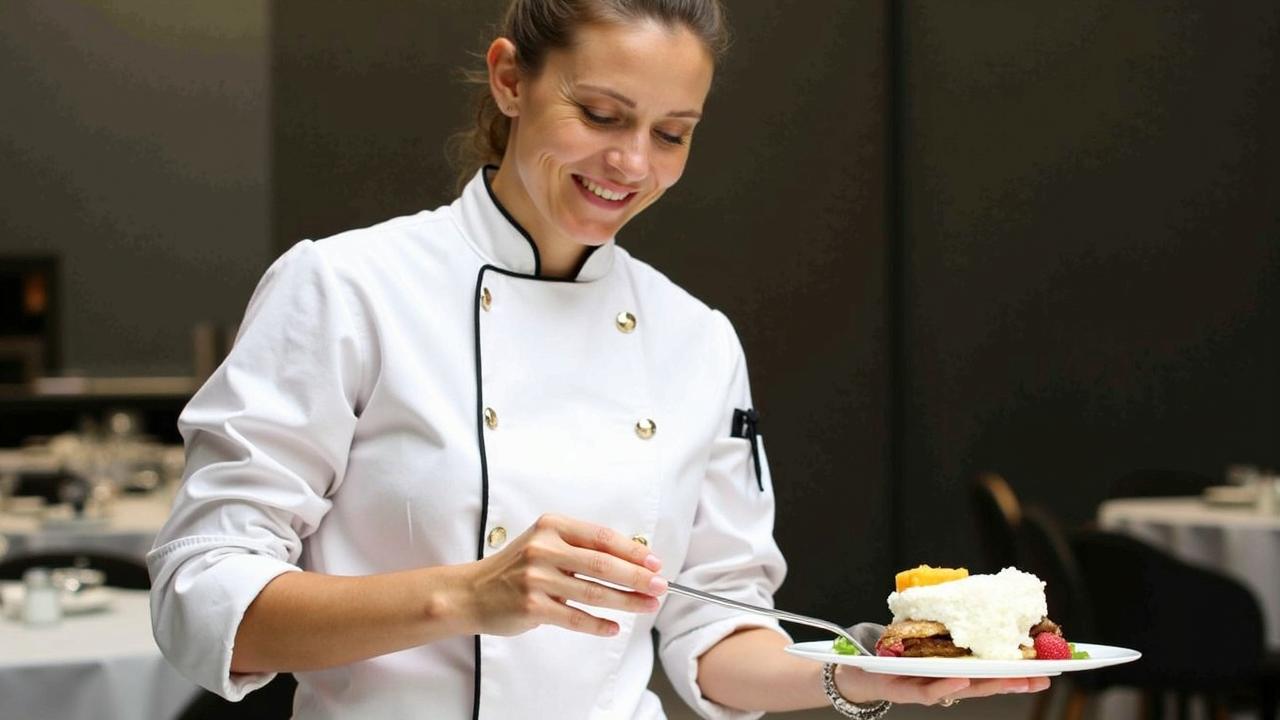
Anne-Sophie Pic, who holds 11 Michelin stars across seven restaurants worldwide, is planning a hybrid destination where contemporary art, architecture and haute cuisine sit side by side.
The opening date currently circling on insiders’ calendars is November 2026, about a year after the Fondation Cartier welcomes visitors to its new cultural complex inside the former Louvre des Antiquaires.
A cultural landmark with a serious kitchen
The Fondation Cartier has already started a new life at 2, place du Palais-Royal, leaving its long-time glass-and-steel building on Boulevard Raspail. The new site has a more historic feel: grand volumes, Second Empire flair and a location that puts it at the crossroads of tourists, office workers and well-heeled locals.
Rather than renting a discreet corner, Pic will be fully integrated into the foundation’s project. The restaurant and bar are being designed alongside the exhibition spaces so that a visit can move naturally from gallery to table and on to a drink, without leaving the building.
The goal: turn a museum visit into a full evening out, where culture, dinner and cocktails follow one another without a taxi or Métro in between.
For the Fondation Cartier, this is a way of shifting from daytime-only institution to all-day-and-evening venue. For Pic, it creates a stage where her cooking speaks directly to the visual and architectural environment, instead of being just another fine-dining room in central Paris.
➡️ Ramadan: why supermarkets ramp up offers and promotions every year
➡️ Stuck shell, torn whites: that’s ancient history with the spoon trick for peeling hard-boiled eggs
➡️ Your leftover raclette deserves better than a box forgotten at the back of the fridge
➡️ Are bottled flavoured waters treated? 60 Millions de consommateurs experts shed light on the issue
➡️ Why you should always flip your sardine tins in your cupboard
➡️ Intermarché: it’s official, the wolf from the advert is becoming the supermarket’s mascot
➡️ Have you ever tried cloud eggs? This light way to cook them
➡️ Rodent droppings and carcasses: Yvelines hypermarket butcher counter reopens after shocking closure
La Dame de Pic closes, but the spirit travels
La Dame de Pic, sitting at 20 Rue du Louvre since 2010, became a reference point for food-focused visitors to Paris. It offered a Michelin-starred experience that felt less intimidating than the hushed palace-hotel dining rooms, with sharp flavours and approachable service.
The restaurant will close before the new project opens, although the gap should be relatively short. Regulars who fear losing “their” table may be reassured by the distance involved: the move from Rue du Louvre to Place du Palais-Royal can be covered in minutes on foot.
More than the postcode, what is expected to travel is Pic’s distinctive style. Her cooking often focuses on subtle but persistent aromas, carefully layered textures and contrasts that feel precise rather than flashy.
The philosophy of “imprégnation”
One concept will remain central: what the chef calls “imprégnation”. Instead of relying only on sauces added at the end, she works by slowly imprinting flavours onto ingredients through techniques such as infusion, marinating, poaching, ageing and smoking.
- Infusion: herbs, teas or spices steeped in broths or creams before serving.
- Marinade: long, gentle contact with aromatics that season an ingredient to the core.
- Poaching: low-temperature cooking that avoids aggressive heat and preserves fragrances.
- Maturation: controlled ageing to concentrate taste and improve texture.
- Smoking: subtle smoky touches that add depth rather than dominate.
Applied carefully, this method allows each component on the plate to carry its own narrative, while still fitting into a coherent whole. For diners, that usually means a sequence of dishes where flavours echo each other from course to course, instead of a series of unrelated showpieces.
A signature bar built around food-friendly cocktails
The Paris project is not just about a dining room. It also includes a bar meant to act as an extension of the kitchen, rather than a separate universe.
The cocktail list will be created in close collaboration with the culinary team. Drinks are expected to follow the same logic of layered aromas, using techniques familiar from the kitchen: infusions, clarified juices, fermented elements and precise seasoning.
Guests will be able to build an entire evening around food-cocktail pairings, from the first bite to the last sip.
Paz Levinson, the group’s highly regarded head sommelier, is involved in shaping this “liquid” offer. Her role is not limited to choosing wines. She will help define how cocktails, sake, low-alcohol options and classic bottles can coexist in one coherent experience, including non-alcoholic proposals that still feel gastronomic.
What an evening there could look like
Think of a late-afternoon visit to an exhibition at the Fondation Cartier, followed by a seat at the restaurant as daylight fades over the Palais-Royal arcades. A menu built around seasonal produce might be accompanied by a progression of drinks: a delicate, tea-based cocktail to start, a sharp white wine for a fish dish, a vegetable-driven mocktail pairing with a main course, and perhaps a final glass infused with roasted spices for dessert.
Instead of choosing between “just a drink” or a full dinner, guests could move fluidly between both. A solo visitor might sit at the bar for small plates and a precise cocktail, while a group books a table for a longer tasting menu.
Why this opening matters for Paris dining
Anne-Sophie Pic already runs restaurants from Valence, her family’s home base in south-eastern France, to Lausanne, London, Hong Kong and Dubai. The Paris opening is not about planting another distant flag, but about deepening her presence in the French capital.
At a time when many luxury groups are stamping their names on lavish, hotel-based restaurants, this move is slightly different. It positions haute cuisine inside a cultural institution that aims to stay accessible, at least in theory, to a wide urban audience.
| Aspect | La Dame de Pic (old site) | New Fondation Cartier restaurant |
|---|---|---|
| Location | Rue du Louvre, near Les Halles | Place du Palais-Royal, facing Rue de Rivoli |
| Setting | Standalone restaurant | Integrated into major art foundation |
| Concept | Modern French fine dining | Fine dining + signature bar + cultural hub |
| Experience | Lunch or dinner | Exhibitions, dinner, cocktails in one place |
For visitors from the UK or US, this could quickly rank alongside big-name Paris destinations around the Louvre and the Tuileries. A pre-booked table may become as sought-after as timed tickets for blockbuster exhibitions.
What diners should know before booking
Although detailed menus and prices have not yet been announced, a few educated guesses can be made based on Pic’s other restaurants.
- Expect a tasting menu format, likely with a shorter and a longer option.
- Lunch might offer a more accessible set menu that attracts nearby office workers.
- The bar area could become a smart way in for those who want a taste of the kitchen without committing to a full menu.
- Reservations will probably open several months ahead, and waiting lists at peak times are likely.
Travellers keen to plan a 2026 or 2027 trip could start building flexibility into their schedule now. Allowing two possible evenings in Paris rather than just one creates room to catch a cancellation or a last-minute opening.
Key terms and trends behind the hype
For readers less familiar with French fine dining, a few concepts worth clarifying help decode the excitement around this project.
Michelin stars. The Michelin Guide awards one, two or three stars. Pic is the most starred female chef in the world, with a total of 11 stars across her restaurants. That does not mean every venue she opens automatically receives stars, but it signals a consistent level of ambition and standards.
Food-cocktail pairing. Traditionally, wine pairing has dominated French gastronomy. Matching cocktails with food is a younger trend, bringing mixologists into the creative process early. When done well, this can reduce alcohol intake through lower-strength drinks while keeping flavour intensity and variety.
Restaurant inside a museum. Placing ambitious restaurants in cultural institutions has become more common, from London’s Tate Modern to New York’s MoMA. The combination can broaden the audience for both: art visitors might stretch their stay with dinner, while food-driven guests might arrive earlier to see an exhibition.
For Paris, the fusion of the Fondation Cartier’s contemporary art programme with Pic’s nuanced cooking and a serious bar looks set to create one of the city’s most talked-about openings of 2026, and a fresh reason to linger around the Palais-Royal after dark.