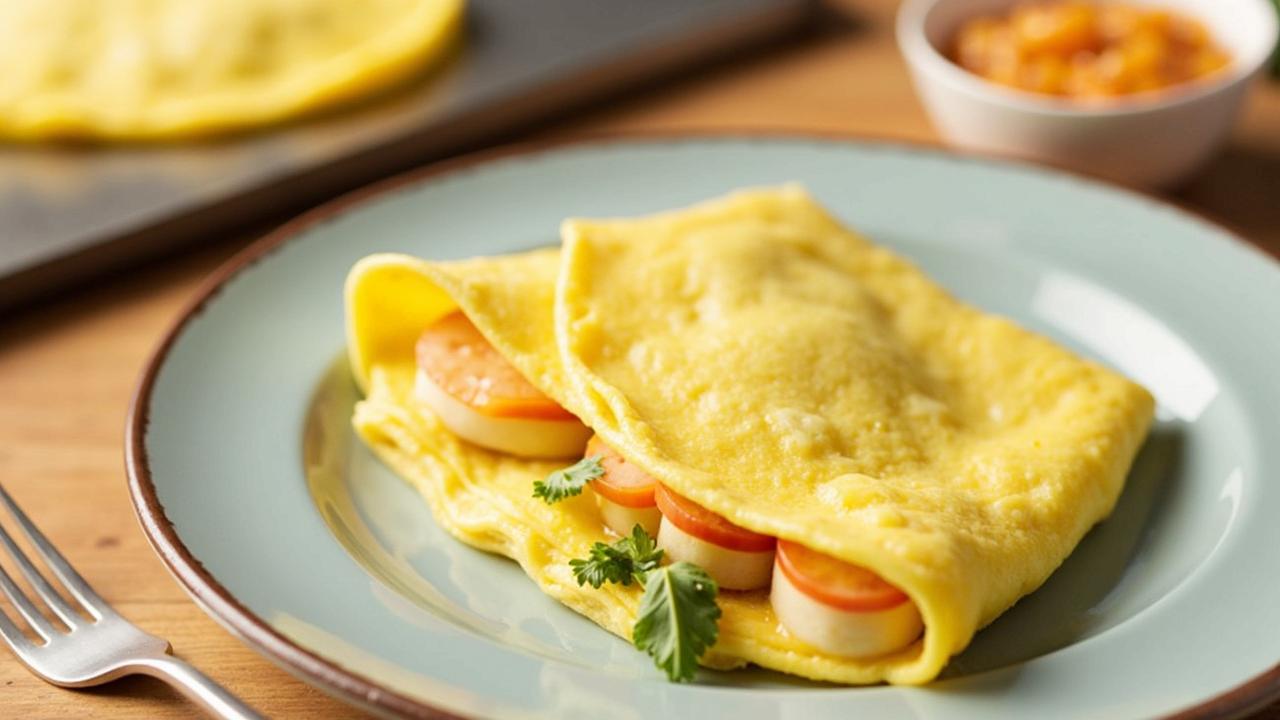
At first glance, that towering restaurant omelette looks like wizardry.
In reality, a small change in preparation quietly does the magic.
Home cooks often blame their pan, their hob, or their “bad technique” when an omelette turns out flat. Yet a basic fridge ingredient, added at just the right moment, can turn everyday eggs into something that looks and tastes straight off a bistro menu.
Why most home omelettes stay flat
A classic home omelette is quick: crack, whisk, pan, plate. That speed is convenient, but it limits volume. The eggs are beaten just enough to mix the white and yolk, not enough to trap much air.
Restaurant-style omelettes that puff dramatically use a different approach. They treat eggs almost like a batter, building in air and then protecting it during cooking.
For a tall, cloud-like omelette, the game is less about more eggs and more about more air.
The first technical difference is simple but crucial: separating yolks and whites. The whites are beaten until they form soft peaks, a bit like for a meringue. Those tiny air bubbles become the scaffolding that makes the omelette rise.
Then there is the heat. A pan that is too hot browns the base fast while leaving the inside dense. A pan that is too cold lets the mixture spread out before it has time to set. Professional kitchens aim for a balance: hot enough to set the bottom, then gentle, even heat to finish the centre.
The quiet ingredient that changes everything
The twist hiding in many chefs’ techniques is not exotic. It sits in most supermarket dairy aisles: liquid cream.
A spoonful of cream stirred into the yolks helps the omelette puff, then stay soft instead of collapsing.
Here is what happens. Cream adds fat and a little water. The fat helps coat the proteins in the eggs, so they tighten more slowly as they cook. That gives the omelette time to rise before it sets. The water in the cream turns to steam, nudging the structure upwards from the inside.
➡️ “When I don’t have mascarpone, here’s what I use instead without losing any indulgence”
➡️ This simple trick finally stops your caramel from burning or crystallising
➡️ Tomato sauce too acidic? The Italian no-sugar trick that transforms the taste
➡️ The jury still can’t believe it: these two French brothers just won the pastry world championship
➡️ Nationwide recall in France after goat’s cheese found contaminated with harmful bacteria
➡️ Fruit recall at Intermarché, Grand Frais, Fresh and others over pesticide limit breach
➡️ Why chefs swear by clarified butter to elevate their dishes – and how to make it
The result is a texture that feels both light and custardy. The omelette doesn’t go rubbery as quickly. It stays tender, even if it sits on the plate for a few minutes while you get everyone to the table.
How to use cream the smart way
The technique is straightforward and doesn’t need special tools.
- Use 3 eggs for one generous omelette.
- Add about 1 tablespoon of liquid cream to the yolks.
- Season the yolks before mixing in the whites.
- Beat the whites separately to soft peaks.
- Fold gently, keeping as much air as possible.
For the cream, heavy cream, whipping cream or double cream all work. Single cream works too, but the richer options bring more flavour and a silkier feel.
Step-by-step: from flat to fluffy
For readers who like a precise roadmap, here is a simple method you can follow tonight.
| Step | What to do |
|---|---|
| 1 | Separate 3 eggs, placing yolks in one bowl and whites in another. |
| 2 | Whisk yolks with 1 tablespoon of liquid cream, salt and pepper until slightly frothy. |
| 3 | Beat egg whites with a clean whisk until they form soft peaks that just hold their shape. |
| 4 | Fold the whites into the yolks in two or three batches, using a spatula and broad, gentle movements. |
| 5 | Heat a knob of butter in a non-stick pan over medium heat until it foams but does not brown. |
| 6 | Pour the mixture into the pan, level it slightly, then reduce the heat to low and cover with a lid. |
| 7 | Cook for a few minutes until the base is set and the top is just barely moist, then fold or slide onto a plate. |
The lid matters. It traps heat and a little steam above the omelette. That helps the top cook through without needing high heat underneath, which would flatten it.
The role of gentle heat and timing
Many failed “soufflé” omelettes have one thing in common: impatience with the hob. High flames feel powerful but work against you here.
Think of the omelette as a foam you are trying to protect, not a steak you are trying to sear.
Start with medium heat to warm the butter and set the first layer of egg. As soon as the mixture hits the pan, turn the heat down. The aim is a quiet, even sizzle, not an angry hiss.
Once covered, resist lifting the lid every few seconds. Each peek lets heat escape and interrupts the gentle cooking environment you are trying to build.
What about fillings?
Cheese, ham, herbs or vegetables all add flavour, but they also add weight and moisture. Too much, and the omelette sags.
Use finely grated cheese rather than thick cubes, and pre-cook watery ingredients such as mushrooms or tomatoes. Scatter them lightly over the pan before pouring in the egg mixture, or sprinkle over the surface halfway through cooking.
For a tall omelette that still holds, aim for more egg than filling. A good base ratio for 3 eggs is:
- 20–30 g grated cheese
- 20–30 g chopped ham or cooked vegetables
- a tablespoon of fresh herbs
Why cream beats milk for this trick
Some recipes suggest adding milk instead of cream. Milk does make eggs looser, but it lacks the fat that slows protein tightening. That means less of the pillowy effect and a higher risk of a slightly watery finish.
Cream changes both the structure and the flavour, giving a richer, more stable omelette.
For anyone watching saturated fat, you can cut the amount of cream to a teaspoon per egg. The texture boost will still be noticeable, even if the result is a little less decadent than the restaurant version.
Extra tips, risks and realistic expectations
There are a few traps worth avoiding. Overbeating the whites until they are stiff and dry makes them hard to fold and more likely to leave clumps. Aim for peaks that curl gently at the tip rather than standing straight up.
Salt also matters. Add it to the yolks or to the finished mixture, not directly into the whites while beating, as it can loosen the foam. Use a non-stick or well-seasoned pan; a sticking omelette deflates quickly as you scrape it free.
In everyday cooking, a towering soufflé-style omelette is not the only goal. The same cream-and-whites technique works in smaller doses. You can make a more modest omelette, slightly thicker but not sky-high, using whole eggs mixed with a spoonful of cream and beaten vigorously without separating. The result will still feel noticeably fluffier than a standard version.
This approach also translates to other egg dishes. A splash of cream in scrambled eggs yields a slower-setting, silkier scramble. Mixed into a frittata or crustless quiche, cream helps create a custard-like centre that reheats well, which can be handy for batch cooking weekday lunches.
For anyone new to cooking, this omelette is a low-cost way to practise basic techniques: separating eggs, folding foams, controlling heat. Those same skills show up later in baking cakes, making chocolate mousse, or preparing a proper soufflé. In that sense, one simple breakfast dish becomes a training ground for a much wider set of kitchen abilities.