On a cold night, a small ramekin of wobbling custard can feel far more luxurious than any elaborate cake.
Across French kitchens this winter, the humble crème caramel is quietly reclaiming the spotlight, thanks to a simple technique that makes its texture unbelievably silky and its flavour deeply comforting.
Why crème caramel is making a quiet comeback
Restaurant-style desserts at home no longer mean complicated entremets or towering layer cakes. Many cooks are heading back to basics, and crème caramel fits that mood perfectly. It is cheap, relies on cupboard staples, and still feels like a treat.
The catch is that this dessert seems deceptively simple. Plenty of home cooks have ended up with scrambled egg custard, rubbery texture, or bitter caramel. A few expert moves during cooking change everything.
Mastering heat control and leaving the caramel alone at the right moment are the two non‑negotiable keys to a flawless crème caramel.
French food commentators often talk about family recipes that stay rigidly unchanged for decades. Behind those recipes sits one core rule: respect for temperature. In crème caramel, the oven, the pan, and even the serving temperature all shape the final texture.
The base recipe that never goes out of style
A classic crème caramel uses very few ingredients. That simplicity exposes every mistake, but it also means you can focus on getting the technique right.
The custard: rich but not heavy
- 500 ml whole milk (about 2 cups)
- 3 whole eggs
- 3 egg yolks
- 80 g caster sugar (about ⅓ cup plus 1 tablespoon)
- 1 vanilla pod or 2 teaspoons quality vanilla extract
The caramel: just sugar and heat
- 50 g caster sugar (about ¼ cup)
That is all you need for the base. No cream, no cornflour, no flavourings beyond vanilla. The custard stays light, but the extra yolks give it that soft-set, spoon-coating feel people associate with restaurant versions.
The foolproof trick: controlled cooking from start to finish
The real safeguard against lumpy or rubbery crème caramel is the way you handle heat. Rather than baking the custard directly, you cook it gently in a water bath, or bain-marie. Paired with a calm approach to caramel, it keeps the texture smooth from edge to centre.
Step-by-step method with the key gestures
The custard should wobble like a soft jelly when you gently shake the ramekin; that movement is a sign you have nailed the texture.
➡️ Recall At Leclerc, Intermarché, Système U And Others Due To Contaminated Product: Black Pudding
➡️ It’s official: supermarket prices are the most attractive in this region of France
➡️ You Don’t Need To Be An Expert To Make This Foie Gras: I Use My Microwave And It Costs Me Far Less
➡️ Making your own galette des rois like a chef, from home: yes, it’s possible
➡️ Mercosur: can supermarkets refuse to apply the trade deal?
➡️ Why keep buying chocolate chips when this quick, budget recipe exists?
➡️ Carrefour will change everything in store: these transformations are a real step forward
➡️ Stop bland, dry cottage pie: the surprising addition that makes it meltingly soft and irresistible
The bain-marie, explained like a pro tip
The water bath creates a buffer between the oven’s dry heat and the delicate eggs. Instead of sudden temperature spikes, the custard heats evenly and slowly.
- Use hot tap water or recently boiled water, not cold, so the oven does not struggle to reach temperature.
- Do not let the water level cover the ramekin rims; you want moisture, not a flood.
- If the tops brown or puff, the oven is too hot or the water level is too low.
Many chefs even lower the oven to around 150–160°C (300–320°F) if they have time, stretching the cooking a little longer for an even softer set. For home cooks, 180°C with careful timing remains manageable and reliable.
Getting the caramel just right
Caramel is what gives crème caramel both its colour and its signature bittersweet edge. The biggest mistake is fussing with it too much.
Once the sugar starts melting, resist the urge to stir. Swirl the pan gently if needed, but keep utensils out.
Stirring can make sugar crystallise, leaving gritty chunks. Instead, let the first layer of sugar melt into a clear syrup, then add the rest and keep an eye on the colour. You are aiming for amber, not dark mahogany.
| Caramel colour | Taste result | What to do |
|---|---|---|
| Pale gold | Very sweet, low bitterness | Fine if you like gentle flavours, but a bit flat |
| Amber | Balanced sweet and bitter | Ideal for crème caramel |
| Dark brown | Strong bitter notes | Risk of burnt taste, best to restart |
As soon as the caramel turns amber, work fast. Pour it into the moulds and tilt to coat the bases. It firms up quickly, so hesitation leaves thick puddles instead of a thin, glossy layer.
Common mistakes that ruin the texture
Even with a clear recipe, small errors can creep in. Recognising them helps you avoid that disappointing first spoonful.
- Boiling the milk: this can pre-cook the proteins and push the custard towards a grainy texture.
- Whisking too hard after adding hot milk: this adds too much air, leading to bubbles and a spongy finish.
- Overbaking: the custard tightens, releasing water and turning rubbery.
- Skipping the chill: unmoulding while still warm can cause collapse and a runny centre.
For a smoother finish, many chefs strain the custard through a fine sieve before pouring it into the moulds. This removes any bits of cooked egg and makes the texture even more velvety.
Serving ideas that keep the dessert feeling fresh
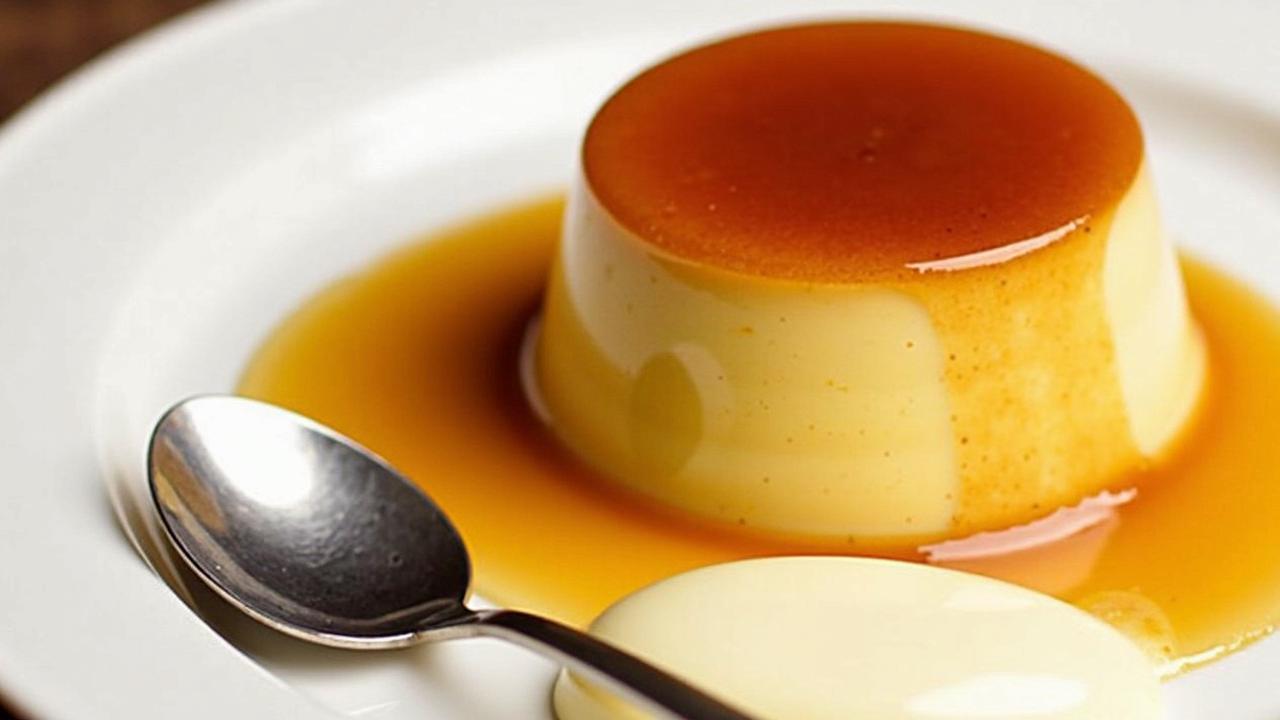
Crème caramel is traditionally served plain, with its own sauce. The liquid caramel, thinned by the moisture from the custard, runs around the plate once you flip it out. Still, there are a few ways to give it a seasonal twist without stealing its character.
- Top with a few thin slices of poached pear or apple for a winter feel.
- Add a tiny pinch of flaky sea salt on top just before serving.
- Serve with a short espresso for a simple, café-style finish to dinner.
Fruit coulis, whipped cream, or chocolate sauce tend to dominate the dessert, so if you use them, keep the portion small and on the side.
Why texture matters so much with custard desserts
Custard desserts such as crème caramel, flan, or crème brûlée all rely on the same science. Egg proteins set when heated. If the heat is controlled, they form a soft, smooth network that traps liquid. If the heat is too fierce, they contract aggressively and expel moisture.
Think of custard as a gently cooked sauce rather than a cake. The goal is just-set, never solid.
This is why recipes often insist on wobble as a sign of doneness. That slight movement in the middle means the custard will finish setting in the fridge while staying tender. A custard baked until fully firm in the oven will end up hard and slightly squeaky on the spoon once chilled.
From weekday dessert to dinner-party standby
Because crème caramel is made ahead and served cold, it suits busy households. You can prepare it the night before, leave it in the fridge, and focus on the main course on the day. For a family of four, a single large mould works. For guests, individual ramekins feel more polished and make serving easier.
There is also a psychological side: many people grew up with supermarket versions of this dessert. Serving a homemade one, with real vanilla and freshly made caramel, almost always sparks a little nostalgia at the table. That emotional pull is part of its renewed appeal, sitting halfway between comfort food and classic gastronomy.