It’s 7pm, your pasta is ready, the sauce waits in a jar, and that lid refuses to budge.
Few kitchen moments are as annoying as wrestling with a sealed jar when dinner is already running late. That tiny metal lid can stand between you and a whole meal, especially if you live alone or have wrist pain. A surprisingly simple spoon trick, popular in French kitchens, is now spreading online – and it might change how you open jars for good.
The problem with stubborn jars
Jars are designed to keep food safe and fresh for months. That means lids are screwed on tightly and sealed under vacuum. Great for chickpeas and green beans, not so great when your grip is weak or your hands are wet.
Many people instinctively twist harder, bang the lid on the counter or ask the strongest person in the room for help. That’s not always an option, and it can cause pain in fingers, wrists or shoulders.
The goal is not to be stronger than the jar, but to be smarter than the seal.
Once you understand how the seal works, the spoon trick starts to make perfect sense.
How the spoon trick actually works
Most glass jars are closed under vacuum. The air inside is partially removed during production, which creates a pressure difference between the inside and the outside. The lid is pulled down and clamped onto a small rim at the top of the jar.
The spoon trick doesn’t rely on force. It targets that pressure difference.
Step-by-step: the spoon method
Here’s how to use a simple metal spoon to open a tight jar in seconds.
- Pick the right spoon: Choose a sturdy metal spoon. Avoid plastic; it bends and can snap.
- Find the top rim: Look at the neck of the jar. Just under the lid, there is a tiny ridge where the lid grips the glass.
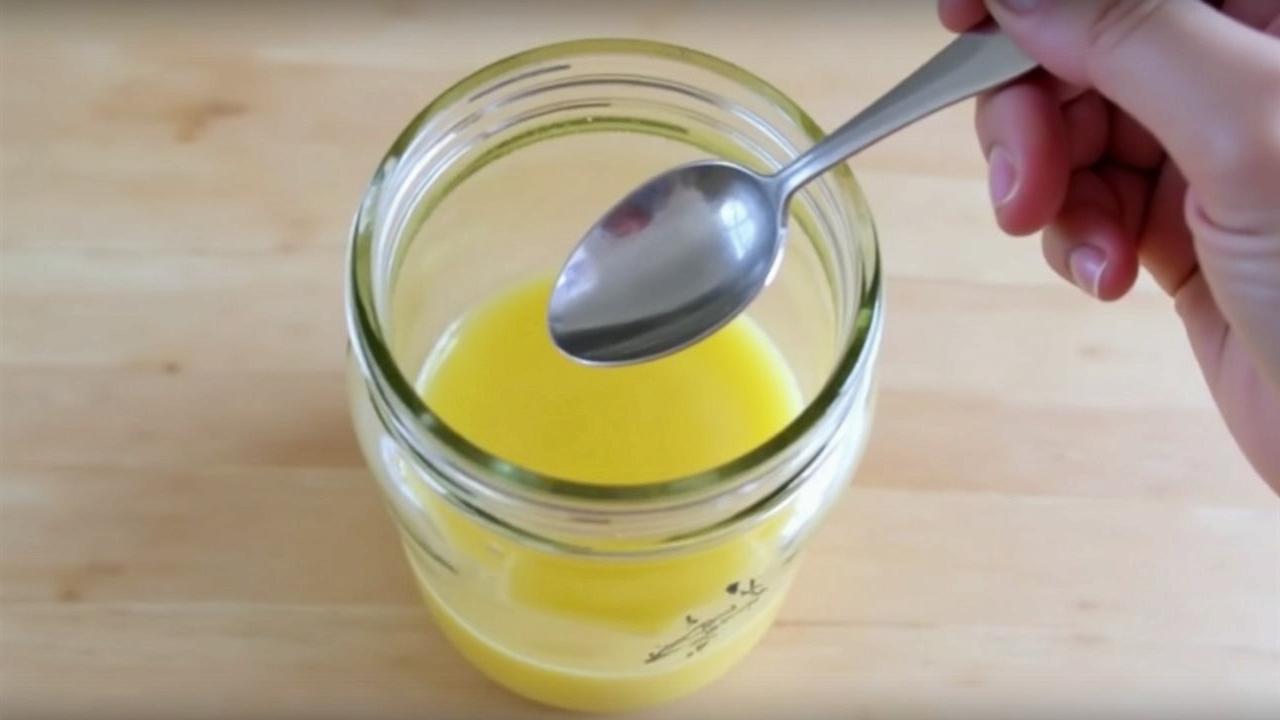
- Slide the spoon under the edge: Place the rounded tip of the spoon under the metal lip of the lid, right above that rim.
- Use gentle leverage: Hold the jar firmly with one hand. With the other, push the handle of the spoon down so the rounded part lifts the lid very slightly.
- Rotate around the lid: Move the spoon a few centimetres along the edge and repeat. Work around the lid, gently lifting in different spots.
You’ll usually hear a soft “pop” as air enters. That noise is your signal: the vacuum seal is broken. At that point, the lid should twist off easily, with almost no effort.
➡️ Making your own galette des rois like a chef, from home: yes, it’s possible
➡️ Check your cupboards: some tins of sardines could be worth a small fortune
➡️ Why keep buying chocolate chips when this quick, budget recipe exists?
➡️ Do you know the kettle trick for perfect jammy eggs?
➡️ Mercosur: can supermarkets refuse to apply the trade deal?
➡️ The €1 Ingredient To Replace Butter In Your Pie Crust
➡️ Recall At Leclerc, Intermarché, Système U And Others Due To Contaminated Product: Black Pudding
➡️ Homemade crème caramel: the foolproof trick for a perfect texture and authentic flavour
Once the seal is broken, opening the jar feels like unscrewing a bottle cap, not fighting a clamp.
Why the spoon trick feels so easy
People often assume they need more strength. In reality, what they need is less pressure inside the jar. The spoon acts as a mini crowbar, but on a very small scale.
Instead of twisting the entire lid at once, you’re lifting tiny sections along the edge. Each small movement loosens the grip between the rubber seal and the glass. Little by little, the lid releases its hold.
This technique is particularly helpful for:
- older people with reduced grip strength
- those with arthritis or wrist pain
- anyone who lives alone and has no “strong helper” on hand
No spoon nearby? Other tools that can help
Sometimes you’re cooking in a rental kitchen, a campervan or at a friend’s place, and the cutlery drawer is oddly empty. The basic principle stays the same: you want a solid object that can slide under the lid and act as a lever.
Other everyday utensils that work
| Tool | How to use | Risk level |
|---|---|---|
| Butter knife | Insert the pointed tip under the lid edge and lift gently around the rim. | Medium – watch your fingers and avoid slipping. |
| Fork | Place one tine under the lid lip and lever slowly in several spots. | Medium – use a sturdy fork only. |
| Flat-head screwdriver | Slide the head under the edge, twist slightly to lift the lid. | Higher – tool is rigid, can damage lid if forced. |
A sharp kitchen knife can also break the seal, but that option comes with real risk. A slip toward your hand can send you to A&E faster than you can say “pickles”. If you use a knife, choose a strong one with a rounded tip and keep your fingers far from the blade.
The safest options are still blunt tools: a spoon first, then a fork or butter knife if you have no choice.
Common jar-opening myths that don’t help much
Plenty of kitchen folklore surrounds jam jars and tomato sauce lids. Some methods work, others are more theatre than technique.
Banging the lid on the counter
Many people smack the rim of the jar against the worktop or tap it with a knife handle. While this might slightly loosen dried food at the edge, it also risks chipping the glass or denting the lid.
A dented lid can compromise the seal for future storage, and a tiny glass crack is almost impossible to spot before it becomes dangerous.
Running hot water over the lid
Heat can expand the metal lid slightly, making it looser. But the effect is often small, and it can be awkward with large or heavy jars. Not ideal if the jar comes straight from the fridge and you have sensitive fingers.
The spoon trick, in comparison, doesn’t need water, extra equipment or much strength. It works with cold jars, sticky lids and even home-canned vegetables.
Safety and food quality: what you should know
Breaking the vacuum seal is safe as long as you plan to use the contents soon. Once opened, a jar should go into the fridge and be eaten within a reasonable time, following the label guidance.
One detail matters though: if a jar opens too easily with almost no popping sound, and the food looks or smells strange, treat it with suspicion. A strong vacuum is often a sign that the contents have been properly processed and stored.
A healthy jar usually fights back a little the first time you open it.
For home-canned food, the vacuum is part of the safety system. If a lid is already bulging upwards, rusted or moves up and down with a click when pressed in the centre, skip the spoon trick and skip the contents entirely.
When the spoon trick changes your routine
Once you master this method, it quickly becomes a reflex. You stop straining your wrists, and you stop relying on jar-opening gadgets that clutter drawers. For people cooking from pulses, sauces and preserved vegetables several times a week, the difference is noticeable.
Picture a typical evening: you need chickpeas for a quick curry, olives for an apéro, or pickled onions for a sandwich. Instead of bracing yourself for a wrestling match, you reach for a spoon, lift the lid edge in three or four spots, hear the soft pop, and turn the cap without effort.
That small change doesn’t just save time. It also makes cooking feel more accessible to children, older relatives or anyone managing joint pain. A teenager can open a jar without brute force. A grandparent can keep cooking independently a little longer.
Next time a jar seems determined to ruin dinner, leave the drama aside. Look for a solid spoon, work around the rim, and let the laws of pressure and leverage do the heavy lifting for you.