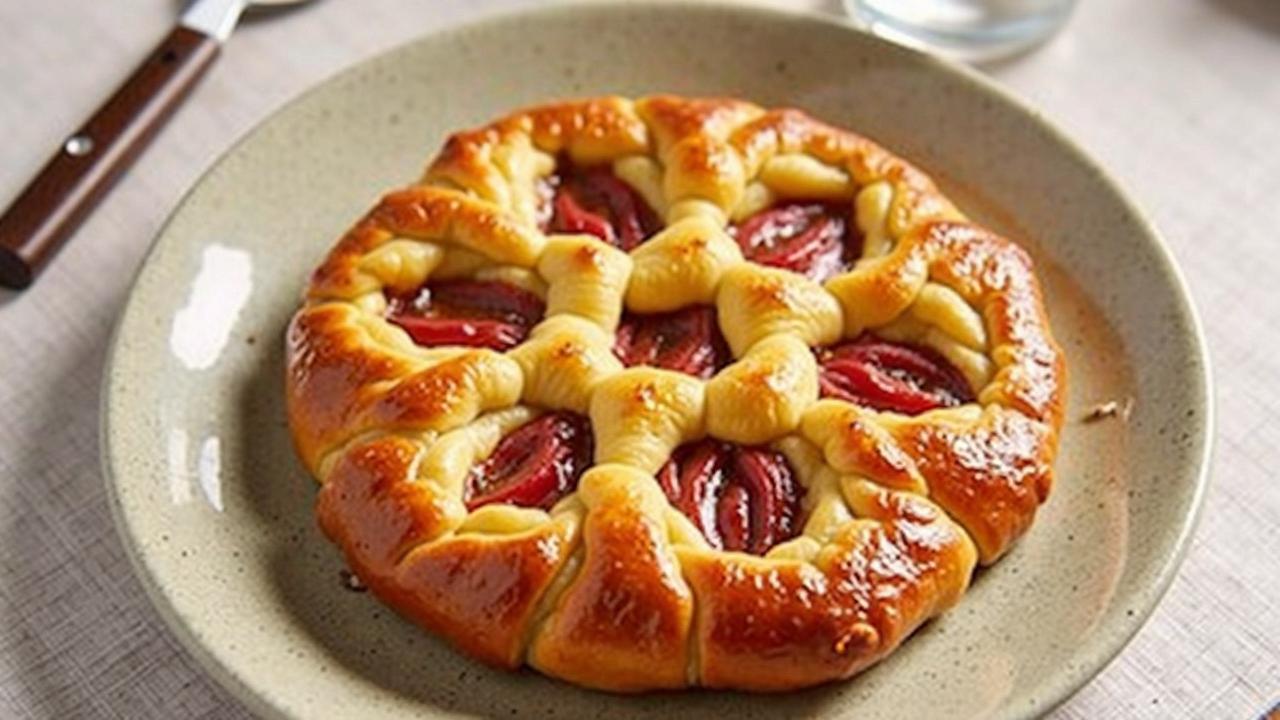
Every January, the same golden pastry appears, the same arguments start, and someone always complains about dry supermarket slices.
Across France and far beyond, the galette des rois has turned into a seasonal obsession, both nostalgic and slightly competitive. This year, more home cooks are skipping the bakery queue and learning to bake a professional-level galette themselves, guided by online pastry classes that break down chef techniques into realistic home steps.
The January pastry that quietly takes over
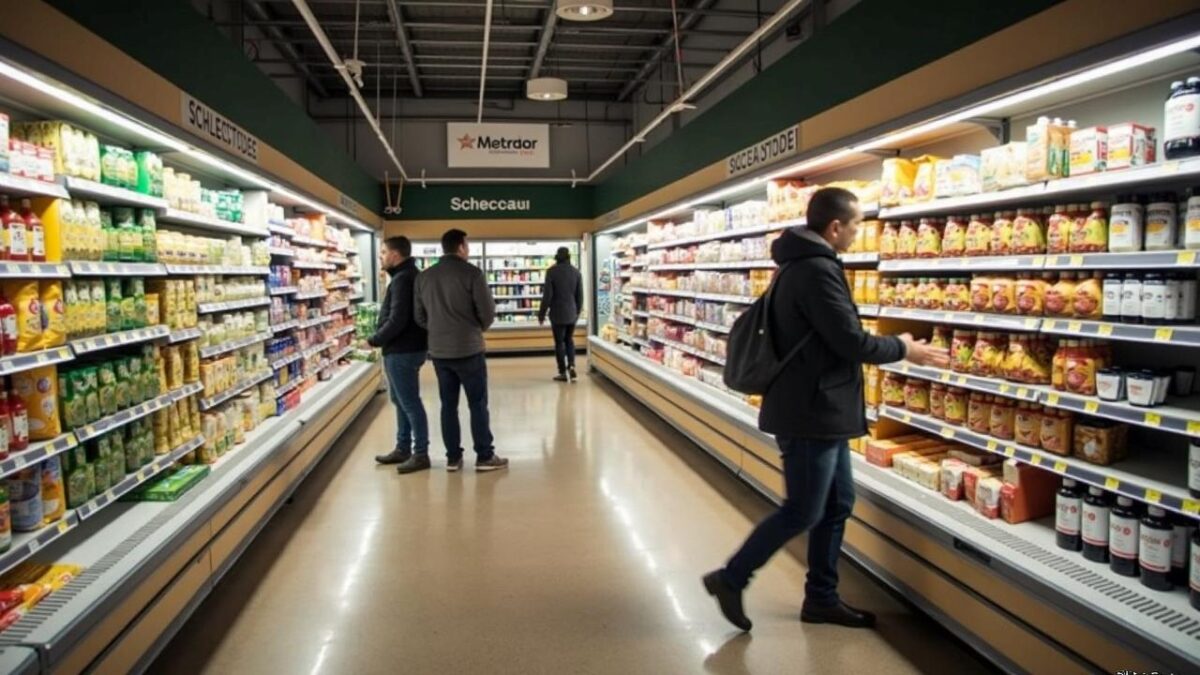
Walk into a French supermarket at the start of the year and you see them first on a small shelf, barely signposted. Within days, galettes des rois colonise the whole bakery section. Boxes pile up, crowns peek out, and the same questions come back every weekend: almond or apple, classic or chocolate, six slices or eight, big brand or local bakery?
Behind the ritual lies a simple truth: for many families, the galette is both a treat and a headache. You want something flaky, rich and fragrant, but you also want it to feel special, not mass-produced. Prices climb quickly, and the quality doesn’t always follow.
This is where the DIY trend is taking off. Instead of debating which brand to pick, more food lovers are asking another question: why not bake it yourself, exactly how you like it?
Home bakers are turning the galette des rois from a supermarket purchase into a personal project that can rival the local boulangerie.
Why making your own galette isn’t just for pros
The obstacle is obvious: the galette des rois has a reputation for being technically demanding. Puff pastry, repeated folding, precise baking, plus a filling that can easily tip from lush to heavy. Many enthusiastic cooks stop right there, convinced this is “chef territory only”.
Online culinary platforms are quietly rewriting that script. One of them, VoilaChef, sits somewhere between YouTube and a professional pastry school. Instead of quick, edited food videos, it offers structured courses where chefs talk through each gesture, ingredient and temperature in real time.
From “too technical” to “step-by-step”
For a classic frangipane galette, the process breaks down into manageable blocks: preparing the dough, laminating it to create layers, mixing the almond cream, assembling, then baking and glazing.
- Each block is filmed in detail, from the angle of the rolling pin to the way you score the top.
- Common mistakes are addressed on camera: butter leaking, dough shrinking, filling escaping.
- Home equipment is taken into account, so you learn to adapt with a standard oven and basic tools.
VoilaChef even opens parts of its frangipane galette course for free, so curious cooks can test the format, the explanations and the pace before paying for a full programme. For hesitant bakers, this trial approach removes a psychological barrier: you can judge whether the method feels achievable in your own kitchen.
➡️ Stop bland, dry cottage pie: the surprising addition that makes it meltingly soft and irresistible
➡️ The €1 Ingredient To Replace Butter In Your Pie Crust
➡️ Why keep buying chocolate chips when this quick, budget recipe exists?
➡️ Homemade crème caramel: the foolproof trick for a perfect texture and authentic flavour
➡️ Do you know the kettle trick for perfect jammy eggs?
➡️ Carrefour will change everything in store: these transformations are a real step forward
➡️ You Don’t Need To Be An Expert To Make This Foie Gras: I Use My Microwave And It Costs Me Far Less
➡️ This Italian woman is adamant: this post‑cooking detail reveals low‑quality pasta
What once looked like a secret pastry-school ritual starts to feel like a recipe you can actually pull off on a Sunday afternoon.
Inside a digital pastry school
VoilaChef positions itself as an online training space rather than a simple recipe site. The target audience is clear: passionate amateurs who already bake regularly, ambitious hobbyists who want to tighten up their technique, and professionals looking to refine skills without taking time off work.
The platform hosts over 130 courses and close to 900 videos, led by more than 40 high-profile chefs: Meilleurs Ouvriers de France (a prestigious French craft title), world champions, palace pastry chefs and seasoned trainers. That roster matters, because it shapes both the level of detail and the credibility of the advice.
| VoilaChef at a glance | What it means for your galette |
|---|---|
| 130+ online courses | From puff pastry basics to advanced chocolate work |
| 900 instructional videos | Every gesture filmed, slowed down and explained |
| 40+ expert chefs | Different styles and tips to suit your level |
| Monthly live sessions | Ask why your galette split or how to fix tough pastry |
Beyond video, the platform provides downloadable technical sheets, a dense index of specific pastry gestures, and live sessions where students can put questions directly to the chefs. For something as touchy as puff pastry, that interaction can change the game. You can show your dough, describe how it behaved in your fridge, and get targeted feedback instead of generic comments.
A MOF baker guiding your all-chocolate galette
One of the flagship galette classes focuses on a full-chocolate frangipane version. The tutor is Cyrille Van Der Stuyft, named Meilleur Ouvrier de France in baking, which is about as high as it gets in French craft recognition.
He walks through every stage: choosing the right flour, controlling butter plasticity, handling cocoa in laminated dough, balancing sweetness so the filling stays intense but not cloying. For home cooks, access to that level of precision without leaving their kitchen feels almost surreal.
Learning galette techniques from a Meilleur Ouvrier de France turns a seasonal recipe into a mini masterclass in French baking.
Shaping a galette that matches your taste
Once you understand the technical backbone, personalisation becomes the fun part. One of the big advantages of making your own galette is control: over sugar, texture, flavour and size.
Adjusting sweetness, texture and flavour
Shop-bought galettes lean towards the sweet and heavy side, partly to please as many palates as possible and keep production simple. At home, you can fine-tune almost everything.
- Reduce sugar in the frangipane if your crowd prefers subtle desserts.
- Swap standard almonds for toasted ones to add depth.
- Add citrus zest, rum or orange blossom for fragrance.
- Play with fillings: pistachio cream, pear and almond, hazelnut and chocolate.
You also control the bake. If you like ultra-crisp pastry, you can extend the cooking time slightly and lower the temperature at the end, something industrial producers rarely risk.
The social side of a homemade galette
Beyond taste, there’s a social dimension. The tradition of hiding a fève (small charm) and crowning a “king” or “queen” for the day becomes more memorable when the host actually made the pastry. Kids can help hide the charm, score the pattern on top, or cut the paper crown.
For guests, there’s a subtle shift in atmosphere too. People stop asking which bakery you picked and start asking how you managed the layers, what butter you used, how long it took. The galette becomes a conversation piece instead of just dessert.
Key concepts that unlock better results
Home bakers often hear technical words thrown around without clear explanations. A few of them matter a lot for this particular pastry.
What “tourage” really means
Tourage is the French term for laminating dough with butter to create layers. The process alternates rolling and folding. Each fold multiplies the number of layers and, once baked, gives that signature lift and flakiness.
In a course setting, tourage is filmed from above and from the side, so you can see how thick the dough should be, how far the butter should reach, and at what point it becomes too soft. This visual detail is hard to transmit in a written recipe alone.
Why butter temperature matters more than you think
Another recurring concept is plasticity: how flexible the butter is. If it is too cold, it breaks into chunks and tears the dough. If it is too warm, it seeps into the dough and destroys the layers. Professional chefs insist on a narrow temperature range, and courses usually show simple tests for checking it by hand.
Once you grasp dough temperature and butter plasticity, puff pastry stops feeling mystical and starts behaving predictably.
Risks, rewards and how to practice
There are, of course, real risks. Puff pastry can shrink, leak or bake unevenly. Overfilled galettes bulge and crack; underbaked ones stay soggy around the filling. Online classes can reduce these risks, but they can’t eliminate them entirely.
That said, the learning curve is surprisingly short once you repeat the key movements. Many home bakers report that their second or third attempt looks dramatically better than the first, as they start reading the dough and adjusting rest times, flour and rolling pressure.
An effective strategy is to treat your first galette of the season as a rehearsal with family only. You experiment with a smaller size, test your oven settings, maybe even deliberately push one variable too far just to see the effect. By the time guests arrive mid-January, the process feels calmer and the result more consistent.
Skills gained extend beyond Epiphany. Once you are comfortable with lamination and frangipane, you can branch out to millefeuille, turnovers, savoury puff pastries or even croissant-style doughs. A seasonal challenge morphs into a broader upgrade of your baking vocabulary, all from the same set of techniques you first used for a simple crown-shaped cake.