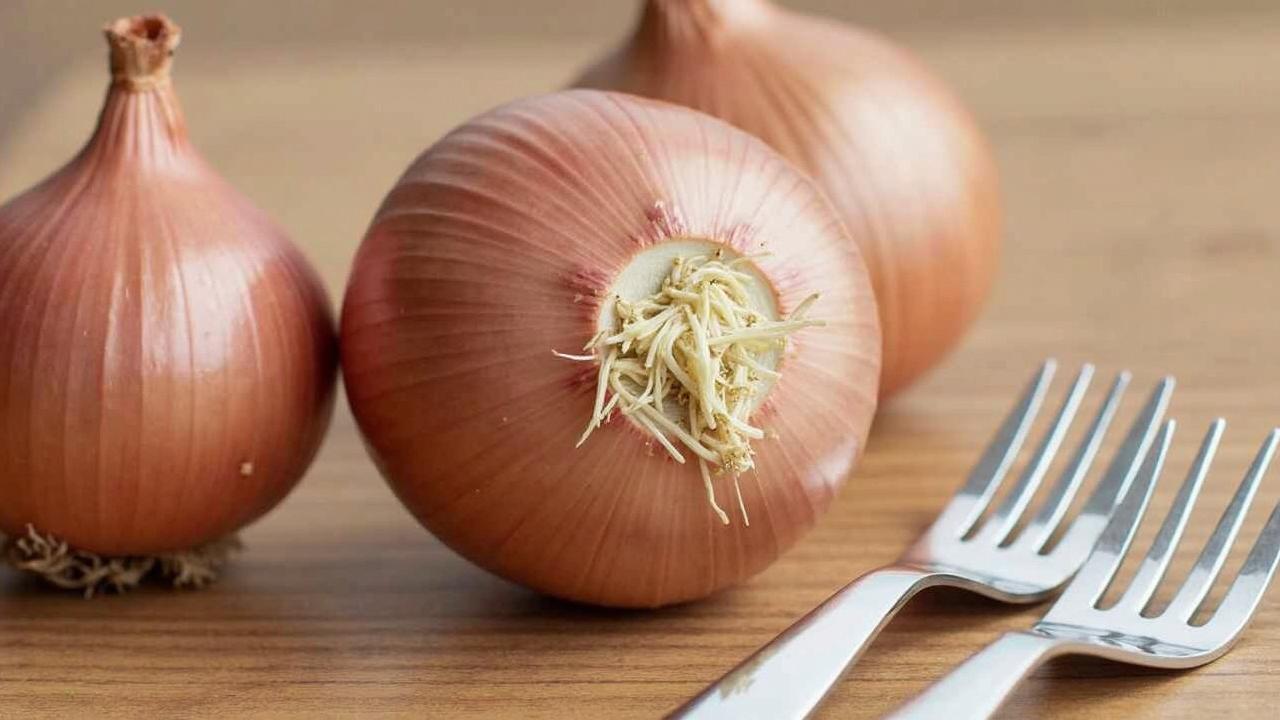
In most kitchens, onions are treated like a single ingredient.
One bulb, one flavour, one role. That’s quietly ruining your salads.
Behind the catch‑all word “onion” hides a whole cast of characters, each with a different texture, sweetness and bite. Choosing the wrong one for a salad, a stew or a taco can flatten flavours. Choosing the right one can make a plate feel like it’s come from a restaurant, not a rushed Tuesday night at home.
Why one onion can rescue a tired salad
When people say they “hate raw onion”, they usually mean they’ve met the wrong kind in the wrong place. A harsh yellow onion, sliced thick and thrown into a salad, will sting the palate and linger for hours. A crisp red onion, treated gently, does almost the opposite: it brightens leaves, balances richness and adds colour.
Switching from yellow to red onion in a salad can be the difference between something you endure and something you finish with bread, scraping the bowl.
Raw red onion brings three powerful things to salads and cold dishes: crunch, sweetness and a little peppery kick. It also brings a violet glow that instantly makes food look fresher and more generous. That visual pop matters, especially when you’re trying to make vegetables feel tempting.
Used sparingly, red onion behaves almost like a seasoning. It lifts avocado, calms the fattiness of cheese and cuts through oily dressings without drowning other flavours.
The right onion for the right job
Not all onions react the same way to heat, acid and time. Treating them as interchangeable means missing out on what each variety does best.
| Onion type | Best use | Key traits |
|---|---|---|
| Red | Salads, sandwiches, pickles | Mild, sweet, colourful, great raw |
| Yellow | Soups, stews, sauces | Strong raw, turns sweet as it cooks |
| White | Salsas, tacos, fresh toppings | Very crunchy, clean and slightly sharp |
| Sweet (Vidalia etc.) | Onion-forward dishes | Low pungency, pronounced sweetness |
| Green/spring | Garnish, stir-fries, omelettes | Gentle onion flavour, edible greens |
Red onion: the salad specialist
For any dish that stays cold, red onion is usually the one you want. It’s naturally milder than standard yellow onions and its cell structure gives a cleaner crunch. That matters in salads, where you want texture but not jaw workout.
There is a simple trick many chefs use to keep red onion from dominating a dish: they “tame” it before it touches the plate.
- Slice it very thinly, ideally with a sharp knife or mandoline.
- Rinse the slices briefly under cold water to wash away some sulfur compounds.
- Soak in ice water or a splash of vinegar for 10–15 minutes, then drain well.
A quick soak can turn a sharp, eye-watering red onion into a crisp, almost fruity ingredient that loves salads.
➡️ Cooking your pasta with the heat off? Here’s why this method will become the norm in 2026
➡️ Stuck shell, torn whites: that’s ancient history with the spoon trick for peeling hard-boiled eggs
➡️ This Moulinex bread maker with 17 automatic programs just lost a quarter of its price on Amazon
➡️ Fewer diners in French restaurants? Here’s what’s really keeping people at home
➡️ People Can’t Believe The Real Difference Between “Pork” And “Pig”
➡️ Low-calorie, this rustic dish is back: it wins over Laurent Mariotte and buries gratin dauphinois
➡️ Have you ever tried cloud eggs? This light way to cook them
Once treated, red onion slides easily into tomato salads, couscous bowls, grain salads, Greek-style salads, smashed avocado on toast and loaded sandwiches. In a basic green salad, just a few paper-thin half-moons can add depth without turning the whole bowl into “onion salad”.
When red onion goes wrong
Red onion loses much of its charm with long, high-heat cooking. The colour fades to a muddy tone and the flavour becomes flatter than that of a well-cooked yellow onion. It works in quick sautés or on a hot grill for a burger topping, but for slow stews it’s rarely the best choice.
Yellow onion: the workhorse of hot cooking
If red onion is the stylist, yellow onion is the builder. It forms the base of broths, braises and sauces because it changes so dramatically with time and heat.
Give yellow onion 40 minutes in a pan and it stops shouting; it whispers sweetness into every corner of the dish.
Raw, yellow onion can be harsh, which is why it often disappoints in salads. But as it cooks, the starches convert to sugars and the bite softens to a rounded, almost jammy sweetness. This makes it ideal for:
- Slow-cooked stews and braises
- Onion soups and creamy vegetable soups
- Tomato sauces and curries
- Quiches, tarts and savoury pies
Sweet onions, sold under names like Vidalia or Walla Walla, look similar to yellow but have paler skins and a higher natural sugar content. They shine in dishes where onion is the star: piled onto a tart, layered into a gratin or turned into deep golden, gratinéed onion soup.
White and green onions: specialists that earn their place
White onions and punchy salsas
White onions are common in Mexican cooking. They are crisp, juicy and slightly hotter than red onions, with a clean bite that cuts through spicy or rich food. Finely chopped, they give fresh salsa, pico de gallo and ceviche a bright, almost sparkling quality.
In a taco, that small spoonful of diced white onion on top is not an afterthought. It balances fat from meat, cheese or avocado without adding weight or colour that might clash.
Green onions and subtle layering
Green onions, also called spring onions or scallions, offer two flavours in one. The dark green tops bring a gentle, grassy note, while the white base carries a light onion kick. Both parts are edible and useful.
Because they are delicate, they work well in quick-cooked dishes and as a last-minute garnish:
- Scattered over stir-fried noodles and fried rice
- Folded into omelettes, scrambled eggs or savoury pancakes
- Mixed into potato salad or mashed potatoes
- Stirred into yoghurt dips or cream cheese spreads
Green onions are one of the easiest ways to add freshness when a dish feels flat but already salty enough.
How onions change with acid, salt and time
Two small kitchen moves can transform how an onion behaves: adding acid and adding salt. Both are at play when you make quick pickled red onions, the garnish that can genuinely turn a plain salad or taco into something you want to photograph.
A basic version needs only thinly sliced red onion, vinegar, a pinch of sugar and salt. After 30 minutes, the slices turn brighter pink and softer. The flavour shifts from raw bite to a tangy, almost sweet note that sits perfectly on salads, roasted vegetables, grilled meats or grain bowls.
Salt alone can change texture too. Rubbing sliced onion with salt and leaving it to rest for a few minutes pulls out moisture and softens the crunch. In a cucumber and onion salad, that gentle wilting makes the vegetables easier to eat and helps them soak up dressing.
Practical scenarios: which onion, which dish?
Home cooks often reach for whatever onion is already in the basket. A few quick rules of thumb can change that habit:
- Throwing together a quick mixed salad? Use red onion, very thinly sliced and rinsed.
- Making a slow beef stew or lentil soup? Start with yellow onions, cooked gently until translucent or lightly golden.
- Serving tacos, chilli or fajitas? Choose white onion for topping, or red onion in lime juice for a fresher feel.
- Cooking noodles or fried rice? Slice green onions and add the white parts early, the greens at the end.
- Craving onion rings or gratinéed onion soup? Pick a sweet onion and let it take centre stage.
There is also a health angle. Different onions contain varying levels of compounds called flavonoids and sulfur compounds, which have been linked with potential cardiovascular and anti-inflammatory benefits. Using more than one type across your weekly meals can widen that range, though portions stay modest.
For anyone sensitive to strong onion flavours, techniques matter as much as variety. Blanching sliced onion in boiling water for 10 seconds, then chilling it, softens the harshness without removing all character. Marinating onion in citrus juice for ceviche or salads changes the chemistry of the compounds that cause tears and lingering smell.
In the end, treating onions as distinct tools rather than a single blunt instrument opens up small but noticeable improvements. A red onion, used thoughtfully, can make salads feel brighter, more modern and more generous. A yellow onion, given time and patience on low heat, can turn a basic pot of ingredients into the kind of dish that tastes as though it took all day, even when it didn’t.