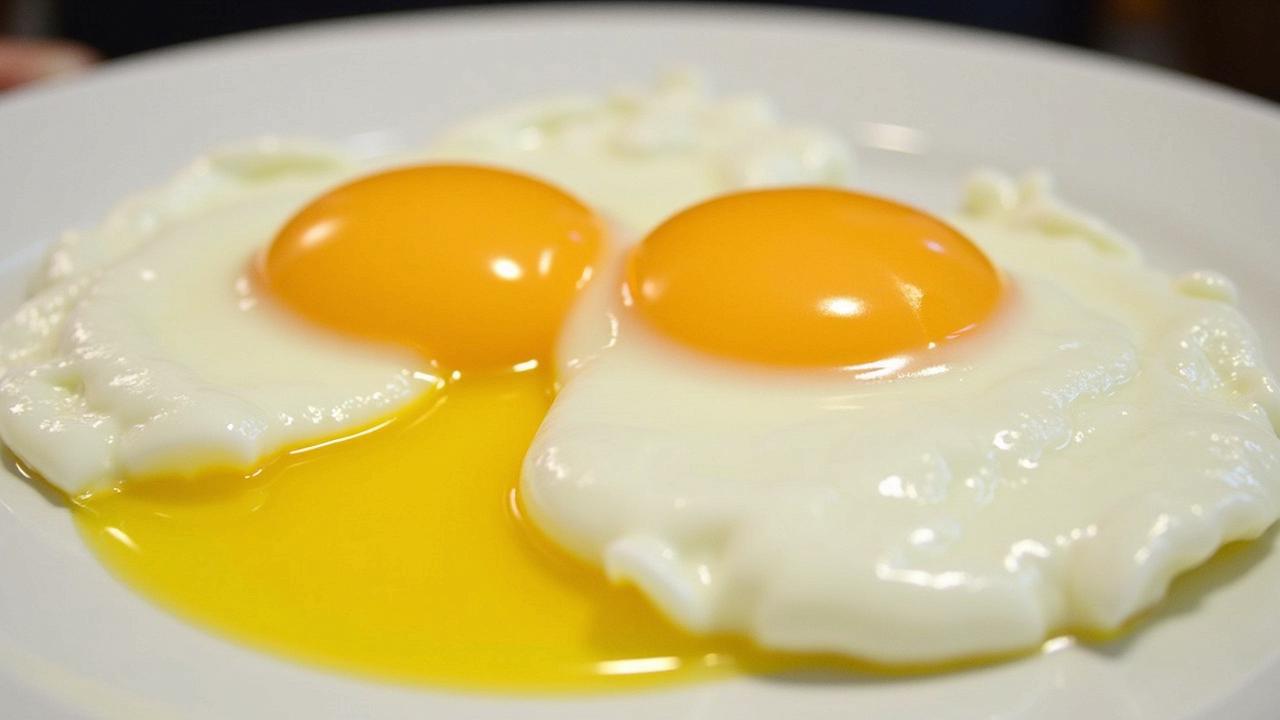
On weekend mornings, when toast and scrambled eggs feel a bit dull, some cooks are turning to a more whimsical plate.
This is where “cloud eggs” come in: a light, puffed-up take on baked eggs that look like something from a brunch restaurant, yet only need a handful of ingredients and a standard oven or air fryer.
What exactly are cloud eggs?
Cloud eggs are whole eggs that have been separated, whipped and baked so that the white turns into a fluffy, golden “cloud” around a still-runny yolk.
The method is simple: you whip the whites to stiff peaks, shape them into nests, then gently return the yolks to the centre before baking for a few minutes at high heat.
Cloud eggs are essentially poached eggs dressed up for brunch: same ingredients, different texture and theatre on the plate.
The result is a contrast in textures that appeals to home cooks: crisp edges on the outside, a melt-in-the-mouth centre, and a yolk that breaks like sauce over toast, vegetables or grains.
Ingredients you need for basic cloud eggs
The traditional French-style recipes keep the list short and unpretentious.
- Eggs (as many as you plan to serve)
- A pinch of salt
- Freshly ground black pepper
- A little grated nutmeg, if you enjoy warm spices
Many cooks use a silicone muffin tray or individual moulds to give the whites structure and to create neat, single portions.
Why silicone moulds are often recommended
Silicone trays release the eggs easily and help them keep their round shape during baking.
One precaution stands out: home economists usually advise against greasing silicone with oil or butter, as repeated exposure to fat at high heat can degrade the material over time and cause it to leach particles.
➡️ This Moulinex bread maker with 17 automatic programs just lost a quarter of its price on Amazon
➡️ Low-calorie, this rustic dish is back: it wins over Laurent Mariotte and buries gratin dauphinois
➡️ Cooking your pasta with the heat off? Here’s why this method will become the norm in 2026
➡️ Here Are The Food Products Hit By The Mercosur Trade Deal
➡️ “These are not miracle teas and infusions”: Dr Cohen urges caution with these 4 products
➡️ Intermarché: it’s official, the wolf from the advert is becoming the supermarket’s mascot
➡️ Paris boils over: the world’s most Michelin-starred female chef opens a dream restaurant
Instead, the whipped whites cling naturally to the silicone and peel off cleanly once baked and cooled for a minute.
Step-by-step: from raw eggs to airy “clouds”
The technique may look intimidating, yet it follows a few clear stages.
1. Separate the eggs carefully
Crack each egg and separate whites from yolks.
Place all the whites together in a large bowl.
Set each yolk into a small ramekin or espresso cup so they stay whole and do not mix with the whites.
2. Season and whip the whites
Add a pinch or two of salt to the bowl of whites, plus pepper and nutmeg if you like its slightly sweet, nutty aroma.
Beat the whites to stiff peaks, ideally with an electric whisk to save effort and obtain a fine, stable foam.
The right texture for cloud eggs is a glossy, firm meringue: when you tilt the bowl, the whites should not slide at all.
3. Shape and fill the “clouds”
Spoon the whipped whites into the cups of a silicone muffin tray, filling each about two-thirds full.
Use the back of the spoon to form a small hollow in the centre of each mound.
Gently slide one yolk into each hollow.
Cover the yolks with a little more meringue, sealing them inside their cloud.
4. Bake quickly at high heat
Preheat your oven or air fryer to around 180°C (about 350°F).
Bake the tray for roughly five minutes, keeping an eye on the colour: the whites should puff and just start to turn golden on top while the yolks remain soft.
Timing varies slightly depending on appliance and egg size, so the first batch serves as a test run for your kitchen.
Texture, taste and how to serve them
When baked correctly, cloud eggs give you three distinct layers of pleasure: a crisp, lightly browned top, a marshmallow-like interior and a rich, flowing yolk at the centre.
The flavour is familiar yet a touch more intense than a standard baked egg, especially if you use a pinch of nutmeg, which echoes in many classic French dishes such as béchamel or potato gratin.
- Serve them over toasted sourdough or brioche for a brunch plate.
- Add them on top of roasted asparagus, spinach or grilled tomatoes.
- Pair them with fried potatoes or hash browns for a more filling meal.
- Set one on a bowl of quinoa or brown rice for a quick dinner.
Cloud eggs work as a centrepiece for a weekend brunch but also as a simple supper when the fridge looks sparse.
Variations and flavour twists
Once you master the basic method, the recipe adapts easily to your taste and what you have on hand.
Adding cheese, herbs or vegetables
Grated hard cheese such as parmesan, pecorino or a mature cheddar can be folded gently into the whipped whites before shaping, giving the clouds a savoury crust.
Finely chopped herbs such as chives, parsley or tarragon also mix well into the foam and bring freshness.
For a heartier version, tiny cubes of cooked bacon, ham or sautéed mushrooms can be scattered into the hollows before the yolks go in.
| Addition | Effect on the dish |
|---|---|
| Grated cheese | Gives a salty, browned top and richer mouthfeel |
| Fresh herbs | Adds colour and a light, aromatic note |
| Cooked vegetables | Makes the plate more filling and boosts fibre |
| Chilli flakes | Brings heat that cuts through the creaminess of the yolk |
Are cloud eggs “lighter” than other egg dishes?
Many social media posts present cloud eggs as a lighter, almost diet version of traditional eggs.
The reality is more nuanced: nutritionally, an egg remains an egg, with similar protein, fat and micronutrient content whatever the cooking method.
The main “lightness” of cloud eggs is about texture and presentation, not about a drastic change in calories.
Where they can be gentler on the plate is in the cooking fat: the whites are baked without oil, so you are not adding extra butter or cream as you might with scrambled eggs or omelettes.
As always, the garnish makes the difference: a cloud egg on steamed greens is a very different proposition from one covered in cheese and bacon.
Food safety, silicone and portion questions
Some readers worry about using silicone trays at high heat, particularly with repeated exposure to oil.
Food agencies in Europe and North America generally approve food-grade silicone for baking within specified temperature ranges, usually well above 180°C.
Avoiding extra fats on the mould can help preserve the material and reduce the risk of degradation, which is one reason recipes for cloud eggs suggest leaving the cups ungreased.
Another frequent question is how many eggs fit into a balanced week.
Recent guidance from many nutrition bodies suggests that healthy adults can eat eggs regularly as part of a varied diet, unless a doctor has advised otherwise due to specific conditions such as familial hypercholesterolaemia.
When cloud eggs make sense in real life
Imagine a Sunday where friends show up with little warning and you have a dozen eggs, a few slices of bread and not much else.
Cloud eggs turn that modest list into a brunch that feels thought-through, especially if you add a quick salad or some roasted cherry tomatoes from the freezer.
They also suit those trying to cook with children: whipping the whites and spooning them into moulds is a tactile, visually satisfying task, and the short oven time matches the attention span of younger helpers.
For students or anyone cooking in a small flat, pairing an air fryer with this recipe makes sense too: the compact space gives a strong, even heat, and the clean-up is limited to a bowl, whisk and tray.
For people experimenting with plant-forward eating, cloud eggs can act as a protein “topping” over vegetable-heavy dishes, replacing meat without losing the sense of indulgence that many want from weekend meals.