Some kitchen gadgets genuinely change daily routines, especially when they manage breakfast, snacks and even weekend baking in one go.
The latest price drop on a popular Moulinex bread maker is drawing attention from families who want fresh loaves without kneading or constant supervision. With multiple automatic programs, gluten-free options and a family-sized capacity, it aims to replace both basic bread machines and a fair few bakery runs.
A family-friendly bread maker quietly goes on sale
Moulinex’s Pain & Plaisir bread maker has slipped into promotion territory on Amazon, dropping from €159.99 to €119.99. That represents a 25% reduction on its usual price, bringing it into reach for buyers who hesitated at full cost.
This discounted Moulinex bread maker now sits at €119.99 instead of €159.99, a cut of around a quarter of its original price.
The machine is built to handle up to 1 kg of dough, which suits most households of three to five people who eat bread daily. Its main selling point is versatility: instead of just turning out square sandwich loaves, it promises bread, brioche, cakes, pizza dough and even jams.
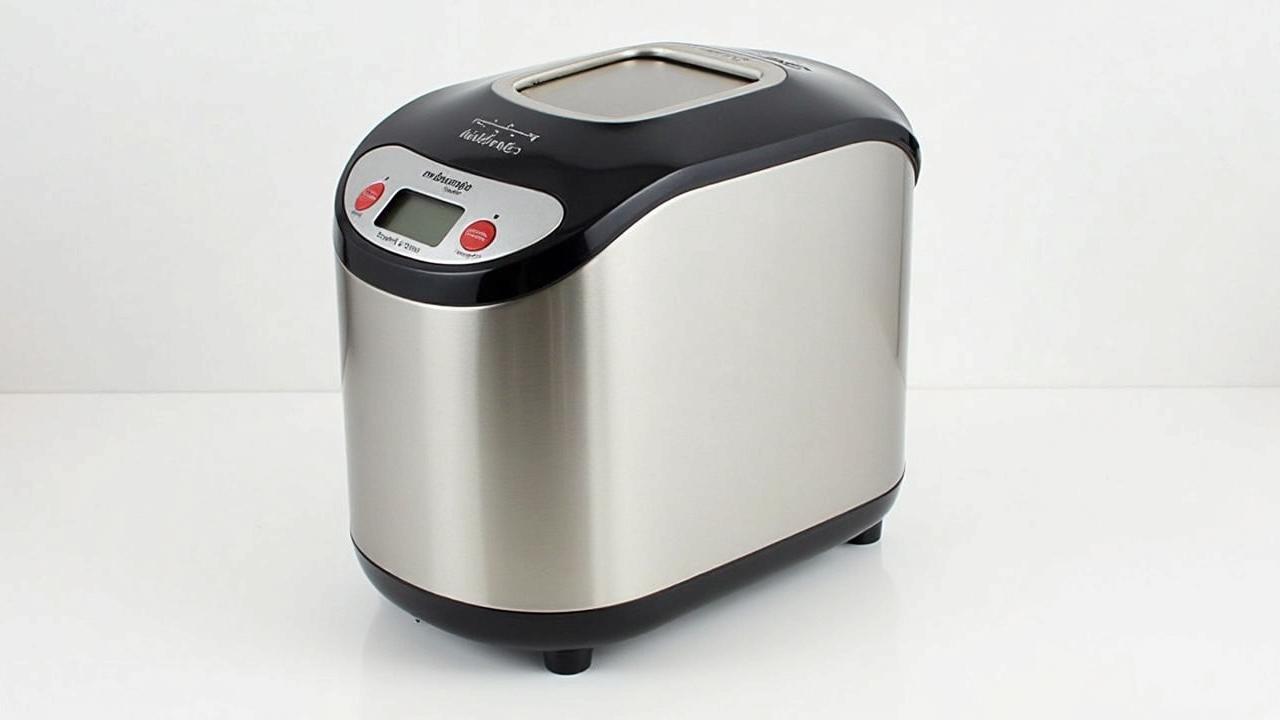
On the outside, the appliance uses a black lacquered finish with a red trim, a typical Moulinex styling choice that helps it blend with many modern kitchens. It remains relatively compact, so it can sit permanently on a worktop without demanding the space of a stand mixer.
Seventeen automatic programs for more than bread
The Pain & Plaisir name hints at its ambition: to manage everyday staples and more indulgent recipes from the same machine. Inside the casing you’ll find 17 preset programs accessed through an LCD control panel.
The LCD control panel and 17 automatic programs are designed so you can select a recipe, press start and let the machine handle the timing.
What you can make with it
While the precise list of presets may vary by region, the general categories covered by the machine are clear. A typical lineup looks like this:
- White bread and country-style loaves
- Wholemeal or multigrain bread
- Rapid bread programs for shorter prep times
- Brioche and enriched doughs
- Cakes and sweet breads
- Pizza dough and other leavened doughs
- Jam and compote-style preparations
- Three programs dedicated to gluten-free recipes
The gluten-free presets stand out. Bread made without gluten behaves differently from wheat dough: it often needs a specific mixing time and carefully controlled rise to avoid dense, gummy crumb. These automated settings aim to take that trial and error away from beginners.
➡️ Rodent droppings and carcasses: Yvelines hypermarket butcher counter reopens after shocking closure
➡️ Ramadan: why supermarkets ramp up offers and promotions every year
➡️ Low-calorie, this rustic dish is back: it wins over Laurent Mariotte and buries gratin dauphinois
➡️ Nationwide recall in France over sheep’s cheese contaminated with listeria
➡️ Why chefs swear by clarified butter to elevate their dishes – and how to make it
➡️ Intermarché: it’s official, the wolf from the advert is becoming the supermarket’s mascot
➡️ Stuck shell, torn whites: that’s ancient history with the spoon trick for peeling hard-boiled eggs
Adapting to your household: capacity and crust
Not every family eats a full loaf at once, and old bread machines were often criticised for producing more than small households could get through before it went stale. Moulinex tackles that by offering three loaf sizes: 500 g, 750 g or 1 kg.
That translates roughly as:
| Selected loaf size | Approximate servings | Best suited for |
|---|---|---|
| 500 g | 6–8 slices | Singles or couples, occasional bread eaters |
| 750 g | 10–12 slices | Small families or shared flats |
| 1 kg | 14–16 slices | Larger families or heavy bread consumers |
The machine also lets users choose the browning level of the crust. Light, medium and dark settings give some control over texture and colour, an important detail for households where tastes vary sharply.
Adjustable loaf size and crust colour make the machine less wasteful and better matched to each family’s habits.
Timing features for fresh bread when you need it
One of the stronger arguments for owning a bread maker is the promise of warm bread exactly when you want it. This Moulinex model offers a delayed start of up to 15 hours.
In practice, that means you can add the ingredients in the evening, program the machine and wake up to a finished loaf. The delayed timer can also work for after-work schedules: set it before leaving the house, and you return to a freshly baked loaf or pizza dough ready to be shaped.
A keep-warm mode holds the bread at serving temperature for roughly an hour after baking. That window is helpful if your morning routine runs late or if guests arrive slightly later than expected.
Maintenance, safety and everyday practicality
Moulinex has tried to lower the barrier for people who are unsure about homemade bread. The machine comes with a recipe booklet covering basic loaves, speciality breads and advice on ingredients, including tips on flours and yeasts.
The baking pan and kneading paddles are removable and carry a non-stick coating, so bread releases more easily once cooked. Both parts are dishwasher safe, which shortens clean-up time. For people already juggling work, children and meal prep, that simplicity matters almost as much as the baking performance.
Cool-touch outer walls and dishwasher-safe parts are aimed at families who want both safety and low-effort cleaning.
Safety receives some attention too. The outer casing is designed so the sides stay cool enough to touch during operation, reducing burn risks in kitchens where children are nearby or counter space is tight. The compact footprint also means the appliance can sit away from gas hobs and other heat sources.
Who benefits most from this kind of bread maker?
While a bread maker is not a strict necessity, specific groups stand to gain from this discounted model.
- Parents who want to control salt and additives in daily bread
- People starting or maintaining a gluten-free diet
- Students or young professionals in shared housing who want cheaper, filling staples
- Anyone in areas where bakery prices have crept up faster than incomes
Because ingredients for a basic loaf usually cost less than a supermarket or bakery equivalent, the machine can pay for itself over time. A rough back-of-the-envelope calculation: if a home-baked 1 kg loaf costs around €1 in flour, yeast and electricity, and a similar bakery loaf costs €2.50, households saving €1.50 per loaf reach the €119.99 machine price in around 80 loaves. For families eating bread daily, that break-even point can arrive in a few months.
Understanding the gluten-free angle
The presence of three dedicated gluten-free programs is worth unpacking, as this is where many cheaper machines fall short. Gluten-free doughs are often closer to thick batter than traditional elastic dough. They can collapse easily or bake unevenly if kneaded too long or left to rise too quickly.
Preset timings in this Moulinex model aim to manage that balance. For someone newly diagnosed with coeliac disease, or for parents baking for a gluten-intolerant child, having dedicated cycles reduces the stress of experimenting with unfamiliar recipes. It doesn’t remove the need to check ingredients or cross-contamination risks, but it simplifies the baking mechanics.
Practical scenarios: from weekday breakfasts to weekend batches
Beyond the marketing claims, the most convincing argument lies in everyday use. A typical weekday might look like this: ingredients measured the previous night, timer set for 7 a.m., and a 750 g loaf ready when the alarm sounds. Slices can be frozen immediately for later in the week, limiting waste and keeping texture fairly close to fresh.
On weekends, the pizza dough program can shift the machine into entertaining mode. Once the dough cycle finishes, you shape the bases and add toppings by hand. Families often use this as a low-cost way to replace takeaway evenings. The jam program adds another use case in late summer, when fruit is abundant and people want to preserve berries or plums without standing by a boiling pan for an hour.
For buyers comparing this bread maker with other kitchen devices, the key question is frequency of use. An air fryer or blender might see daily work, while a bread machine tends to be used in bursts. The adjustable capacity, varied programs and current discount increase the chances that this Moulinex model moves from “occasional gadget” to “regular appliance” on the countertop.